Talks

John Kay

John Kay
Vol. 45
20 May, 2026

"The most profitable companies are not the most profit-oriented."

Interview in English  

Interview with subtitles 

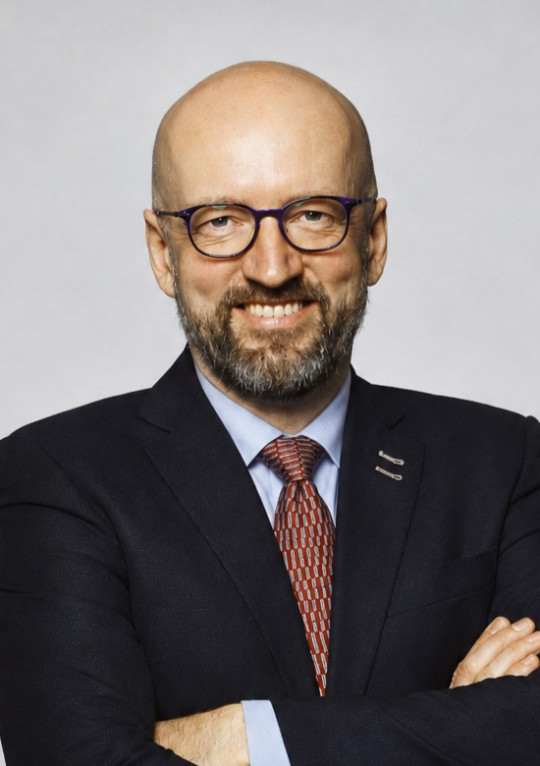
John Kay
Economist / University of Oxford

Sir John Kay, CBE, FBA, FRSE, is one of Britain's leading economists, whose career has spanned the academic world, business and finance, and public affairs. Born in Edinburgh in 1948, he has held chairs at the London Business School, the University of Oxford and the London School of Economics, and has been a Fellow of St John's College, Oxford since 1970, when he was elected to a permanent teaching post at the University of Oxford at the age of 21.


Kay studied at the University of Edinburgh and then at Nuffield College, Oxford, where he worked under James Mirrlees, the future Nobel laureate. He served as the first Research Director of the Institute for Fiscal Studies, founded the consultancy London Economics in 1986, and in 1996 became the founding Dean of Oxford's Saïd Business School. He was also the first Professor of Management to be elected a Fellow of the British Academy. He has served as a member of the Council of Economic Advisers to the First Minister of Scotland (2007–2011) and chaired the Kay Review of UK Equity Markets and Long-Term Decision Making, which reported to the British government in 2012. Following the United Kingdom's vote to leave the European Union, he was appointed to the Standing Council on Scotland and Europe.


Kay is the author of many influential books, including Foundations of Corporate Success (1993), The Truth About Markets (2003) — named Politics Book of the Year in 2005 — Obliquity (2010), The Long and the Short of It (2009, revised 2016), and Other People's Money (2015), which won the Saltire Prize and was shortlisted for the Orwell Prize for Political Writing. His more recent works include Radical Uncertainty (2020, with former Bank of England Governor Mervyn King), Greed is Dead (2020, with Paul Collier), and his latest book, The Corporation in the 21st Century (2024), which examines how the modern corporation has been transformed by globalisation, financialisation and the rise of intangible assets.


A regular Financial Times columnist for nearly three decades, Kay received the Senior Wincott Award for Financial Journalism in 2011. He was elected a Fellow of the British Academy (1997), the Royal Society of Edinburgh (2008) and the Academy of Social Sciences (2016). He was appointed Commander of the Order of the British Empire (CBE) in 2014 for services to economics and was knighted in the 2021 Birthday Honours for services to economics, finance and business.

In this episode of PFI Talks, distinguished British economist and bestselling author John Kay shares his most powerful insights on the modern corporation, financialization, and how to think about risk in a world of radical uncertainty. As a Fellow of St John's College, Oxford and author of Other People's Money, Obliquity, Radical Uncertainty (co-written with former Bank of England Governor Mervyn King), and The Corporation in the 21st Century, Kay explains why the modern firm is a collection of capabilities rather than a pile of capital, why the most profitable companies are not the most profit-oriented, why the stock market has become a way of taking money out of companies rather than putting it in, and what the current AI boom shares with previous bubbles. A wide-ranging, candid conversation with one of Britain's most influential economic minds.

Other
Talks

Božidar 
Djelić

PFI Talks Vol. 26 – Božidar
Djelić

"Central European financial groups are increasingly active in investing in markets previously dominated by their Western competitors, but they are also venturing into developed Western markets," says Božidar Djelić, Managing Director of Lazard Investment Bank, where he also heads the CEE region. He discusses the appetite for expansion of these capital-intensive groups and their position in M&A in the next podcast in the PFI Talks series.

Jan
Švejnar

PFI Talks Vol. 5 – Jan
Švejnar

Jan Švejnar je ekonom, který působí na Kolumbijské univerzitě v New Yorku jako profesor globální ekonomie a ředitel Centra pro globální hospodářskou politiku (Center for Global Economic Governance – CGEG). Je spoluzakladatelem Centra pro ekonomický výzkum a doktorské studium Univerzity Karlovy (CERGE), které se později stalo součástí CERGE-EI, společného pracoviště Univerzity Karlovy a Národohospodářského ústavu AV ČR, v.v.i. (EI), kde předsedá Výkonnému a dozorčímu výboru.

Robert Doucha

PFI Talks Vol. 10 – Robert Doucha

Český fond Green Horizon Renewables (GHR) ze skupiny BHM Group jednoho z nejbohatších Čechů Tomáše Krska tento týden oznámil uzavření obchodu s největším správcem aktiv na světě – společností BlackRock. Předmětem transakce je portfolio dostavených i připravovaných elektráren ve Finsku o celkovém výkonu 220 megawattů. BlackRock akvizice vyjde na celkem 7,1 miliardy korun. Miliardu a půl zaplatí akcionářům včetně fondu GHR, dalších 5,6 miliardy pak investuje do dostavby připravovaných zdrojů, kterou pro něj GHR prostřednictvím společnosti Winda Energy ve Finsku zajistí.

Stanislav Kubáček

PFI Talks Vol. 11 – Stanislav Kubáček

Zatímco v České republice žije téměř 80 procent lidí ve vlastním bytě či domě, v Rakousku či Německu si téměř polovina populace bydlení pronajímá. Ve velkých městech jako Berlín či Vídeň bydlí v nájmu dokonce více než tři čtvrtiny obyvatel. „Česko naopak prošlo v 90. letech obrovským šokem, co se vlastnění majetku a užívání služeb týče, proto je zde moderní nájemní bydlení stále ještě svým způsobem novinkou,“ popisuje Stanislav Kubáček, ředitel akvizičního týmu švédské společnosti Heimstaden.

Daniel Kahneman

PFI Talks Vol. 13 – Daniel Kahneman

As reports and polls from Russia show, a large part of the public there refuses to admit that Russia, not Ukraine, is the origin of the biggest armed conflict in Europe since World War II. According to Daniel Kahneman, such a reaction is understandable not only in terms of the effectiveness of current Russian propaganda. "The reluctance to see one's country as the culprit of aggression, of crime, is very strong in most of us," says Professor Kahneman

Sumit Agarwal

PFI Talks Vol. 15 – Sumit Agarwal

When a speculative bubble bursts, many people usually lose. But history is littered with investment manias in which the suffering of individuals ultimately outweighed the benefits for all. In the 19th century, thousands of speculators burned their hands investing in the shares of American railway companies. But their losses enabled all Americans to switch from horse-drawn carriages to trains. The bursting of the internet bubble at the beginning of the 21st century left many empty family bank accounts, but also a network of data cables that allowed the digital economy to really take off within two decades. What may emerge from the ashes of the cryptocurrency mania is one of the topics Sumit Agarwal discusses.

Marc Faber

PFI Talks Vol. 16 – Marc Faber

Marc Faber, a Swiss investor living in Thailand, doesn't mince his words. In 2017, he dedicated an issue of his monthly investment newsletter, The Gloom, Boom & Doom Report, to the raging racial conflicts in the US. At the time, he said, "Thank God America is populated by whites and not blacks. Otherwise, the United States would look like Zimbabwe, which may happen one day, but America has enjoyed at least 200 years of economic and political prominence." He later defended himself, telling the US television network CNBC in his defence that he was not a racist, but that "the facts should be described as they are, regardless of their degree of political incorrectness". This is also why Marc Faber said goodbye after an hour-long interview, saying: "I believe it is still politically appropriate to say - Merry Christmas!"

Maroš Kravec

PFI Talks Vol. 22 – Maroš Kravec

V anglosaském systému funguje byznys postavený na financování soudních sporů už více než 40 let. Pomáhat poškozeným domoci se spravedlnosti a zároveň díky tomu zhodnocovat peníze se ale postupně učí také investoři v kontinentální Evropě. Mezi nejvýraznější z nich patří i česká společnost LitFin, která se aktuálně podílí na 25 kauzách. Dohromady v nich jde až o dvě miliardy eur. Zakladatel a řídící partner LitFin Maroš Kravec přitom v rozhovoru říká, že by brzy mohlo jít až o desetinásobek – lidé či firmy se totiž nyní kvůli délce a komplikovanosti soudních sporů často o svoje nároky nehlásí, nebo o nich dokonce ani nevědí.

Michal Kuděj

PFI Talks Vol. 23 – Michal Kuděj

České firmy se dokážou celkem dobře adaptovat na vnější makroekonomické podmínky, říká Michal Kuděj, zakládající partner skupiny Tarpan Partners, která se zabývá poradenstvím při restrukturalizacích, insolvencích a akvizicích. Tím, že jde často o vlastnicky řízené a rodinné firmy, jež jejich majitelé chtějí časem předat generaci svých dětí, mají vyšší averzi k riziku a bývají opatrnější. I proto se Česko v posledních třech mimořádně náročných letech vyhnulo vlně bankrotů, před kterou řada ekonomů varovala po vypuknutí pandemie covid-19.

Mojmír Hampl

PFI Talks Vol. 24 – Mojmír Hampl

Nebýt mimořádně vysoké inflace, přijetí eura by v České republice mezi lidmi nyní nebylo vůbec tématem, myslí si předseda Národní rozpočtové rady Mojmír Hampl. V rozhovoru ze řekl, že pokud budou Češi se svojí měnovou a fiskální historií někdy přijímat společnou evropskou měnu, budou k tomu dotlačeni. Spíše než ostatní státy unie ale bude případný tlak na přijetí eura vyvíjet vlastní špatná hospodářská politika.

Dan
McCrum

PFI Talks Vol. 18 – Dan
McCrum

The story of the German financial company Wirecard sounds like the subject of a film. A company with the aura of a European tech giant challenging its American rivals collapsed in 2020, with its path to ruin punctuated by falsified accounts, empty mailboxes in the Philippines and the founder’s escape. The story of the fraud, which many have long refused to believe, has been gradually unravelled since 2014 by Dan McCrum, a journalist at the Financial Times. Last year he published a book, Money Men, and made a documentary based on his reporting. He described the ins and outs of the case during an interview on another PFI Talks podcast.

This site is protected by reCAPTCHA and the Google Privacy Policy and Terms of Service apply.